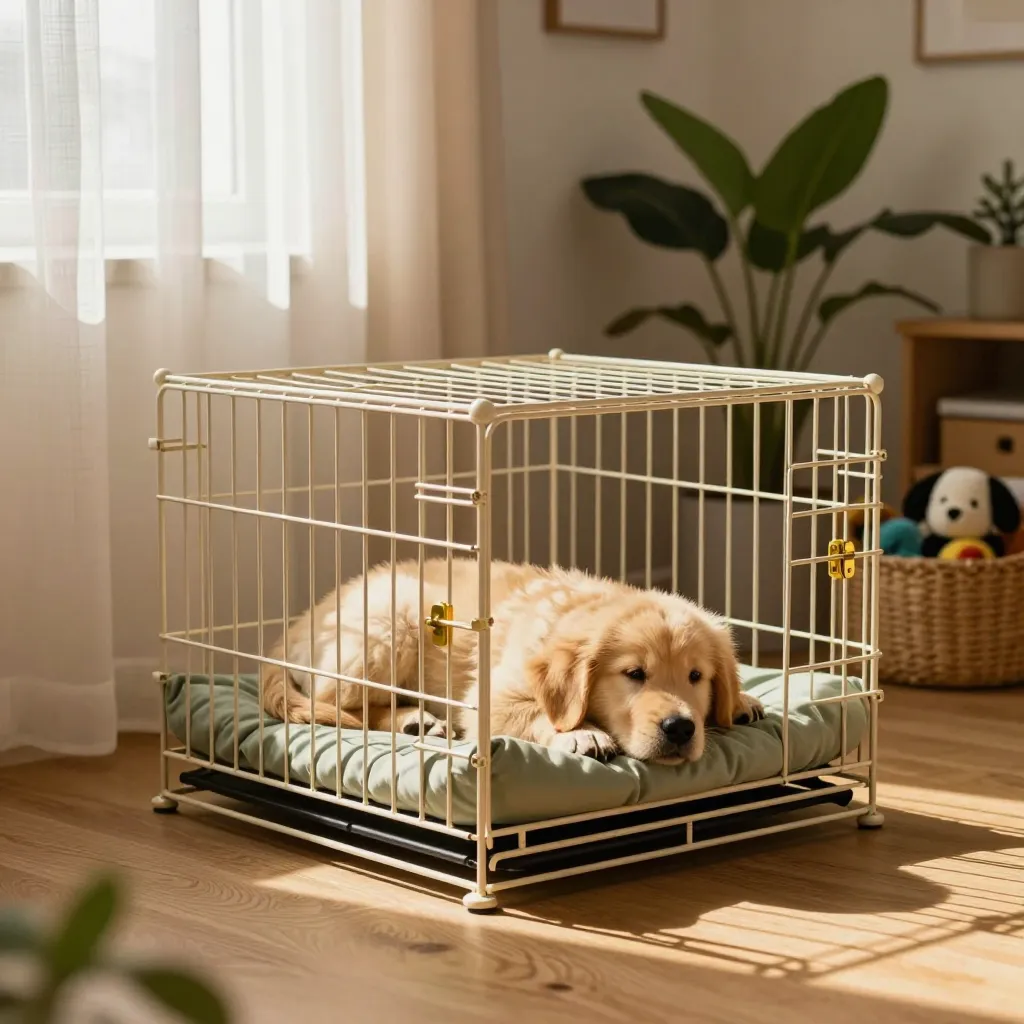
Crate Training Your Puppy: A Step-by-Step Guide for Safety and Success
Learn how to choose the right crate, build positive associations, and establish a routine that reduces puppy anxiety. This comprehensive guide covers everything from size selection to troubleshooting whining, ensuring a stress-free experience for both you and your new companion.
Crate Training Your Puppy: A Step‑by‑Step Guide
Why Crate Training Matters
- Safety first: A properly introduced crate becomes a secure den where your puppy stays out of trouble when you can’t supervise.
- House‑training aid: Dogs instinctively avoid soiling their sleeping area, so a crate helps puppies learn bladder and bowel control.
- Travel friendly: A puppy that feels comfortable in a crate adapts more easily to car rides, vet visits, or vacations.
- Reduces anxiety: A familiar crate provides a consistent “home base” that can calm nervous puppies in new environments.
Choosing the Right Crate
| Feature | What to Look For |
|---|---|
| Size | Your puppy should be able to stand, turn around, and lie down comfortably, but not have excess room to eliminate in one corner. |
| Material | Wire crates offer ventilation and fold‑flat convenience; plastic crates feel more enclosed and can feel safer for some puppies. |
| Portability | If you travel often, a lightweight, collapsible crate is practical. |
| Safety | Ensure no sharp edges, and that any door latch is secure but easy for you to operate. |
Tip: If you have a large‑breed puppy that will grow quickly, consider a “grow‑with‑you” crate with a divider panel. This lets you adjust the interior space as your puppy grows.
Introducing the Crate
- Place the crate in a common area. Set it up in the living room or kitchen where the family spends time. Keep the door open so the puppy can explore it voluntarily.
- Add a soft bedding. A washable dog blanket or a crate‑specific pad makes the space inviting.
- Toss treats inside. Drop a few of your puppy’s favorite treats near the entrance and then further inside, encouraging the pup to step in voluntarily.
- Feed meals in the crate. Serve your puppy’s regular meals inside the crate, starting with the bowl right at the entrance, then gradually moving it deeper over the course of a few days.
Building Positive Associations
- Keep sessions short at first. Let your puppy enter, eat a treat, and leave. Gradually increase the time the door remains open while the puppy stays inside.
- Use a calm voice. Speak soothingly when your puppy enters the crate, reinforcing the idea that the space is a pleasant spot.
- Reward calm behavior. When your puppy lies down or relaxes inside the crate, give gentle praise and a small treat. This teaches that quiet time in the crate earns positive outcomes.
- Avoid forcing entry. Never push or pull a reluctant puppy into the crate; this can create negative associations.
Establishing a Routine
- Schedule potty breaks first. Take your puppy outside immediately after each crate session to reinforce house‑training habits.
- Create a consistent “crate‑time” schedule. Puppies thrive on predictability. For example:
- Morning wake‑up → outdoor potty → short play → crate for a nap
- Midday → potty break → feeding → crate rest
- Evening → potty break → calm interaction → final crate before bedtime
- Use a cue word. Choose a simple phrase like “crate” or “kennel up.” Say it consistently before guiding your puppy into the crate. Over time, the puppy will associate the cue with entering the space.
Gradual Crate Duration
| Week | Suggested Crate Time | Notes |
|---|---|---|
| 1 | 5‑10 minutes, several times a day | Keep sessions short and always end on a positive note. |
| 2 | 15‑20 minutes | Begin adding a short walk or playtime after crate time. |
| 3 | Up to 30‑45 minutes | Introduce brief absences (e.g., step out of the room for a minute). |
| 4+ | 1‑2 hours (depending on age) | Extend absences gradually, always returning before your puppy becomes distressed. |
Remember: Puppies under 12 weeks have limited bladder capacity. They generally need a potty break every 30–60 minutes while awake.
Troubleshooting Common Issues
Whining or Barking
- Check basic needs first: Ensure the puppy isn’t hungry, thirsty, or needing a potty break.
- Ignore attention‑seeking noise: If you know the puppy’s needs are met, wait for a brief pause in the whining before opening the crate. This teaches that quiet earns freedom.
- Avoid punishing the puppy while in the crate; negative reinforcement can increase anxiety.
Reluctance to Enter
- Re‑evaluate the crate’s location: it may be too isolated or too noisy.
- Use higher‑value treats (e.g., small pieces of chicken) to encourage entry.
- Try covering the crate partially with a light blanket to create a more den‑like feel.
Accidents Inside the Crate
- If accidents happen, clean thoroughly with an enzymatic cleaner to eliminate odors that might attract repeat accidents.
- Reduce the time between potty breaks if accidents become frequent.
- Ensure the crate isn’t too large; a spacious crate can feel like a bathroom to a young puppy.
Safety and Comfort Tips
- Never use the crate as a punishment. It should always be a safe, positive space.
- Provide fresh water. For longer crate periods, attach a spill‑proof water bowl to the crate door.
- Monitor temperature. Keep the crate away from direct sunlight or drafts; puppies are sensitive to extreme heat or cold.
- Supervise during initial weeks. Use a baby gate or keep the crate in an area where you can hear your puppy and intervene if needed.
Long‑Term Benefits
When crate training is approached with patience and consistency, most puppies grow into adult dogs that:
- Feel secure when traveling or staying in unfamiliar places.
- Have fewer accidents in the home.
- Display calmer behavior during separations, reducing separation‑anxiety issues.
- Develop a strong, trust‑based bond with their owners because the crate is a place of safety, not stress.
Quick Checklist
- Choose the correct size crate with a comfortable bedding.
- Place the crate in a family‑oriented room with the door open initially.
- Use treats and meals to create positive associations.
- Introduce a cue word and keep sessions short.
- Establish a consistent potty‑break and crate schedule.
- Gradually increase crate duration and introduce brief absences.
- Respond to whining calmly, avoiding punishment.
- Keep the crate safe, clean, and at a comfortable temperature.
By following these guidelines, you’ll give your puppy a lifelong skill that enhances safety, house‑training progress, and overall well‑being. Happy training!