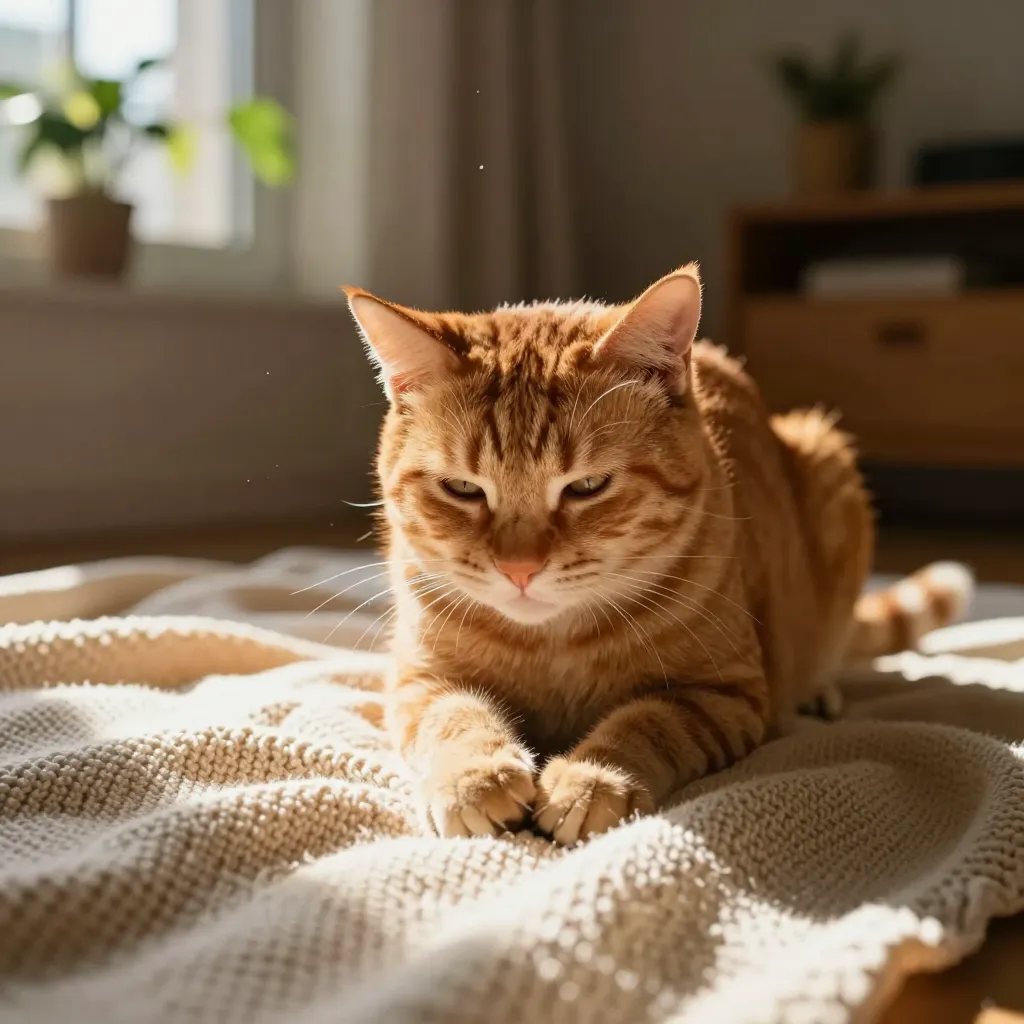
Why Do Cats Knead? Understanding Your Feline Friend's Biscuit-Making Behavior
Ever wonder why your cat 'makes biscuits' on your lap? Explore the fascinating evolutionary reasons behind kneading, from kittenhood survival to scent marking. Learn how to decode your feline's comfort levels and tips for managing sharp claws during these affectionate sessions.
The user wants me to regenerate an entire article based on an original HTML file. but with specific constraints:
Topic: The original HTML appears to be about "People Inc." (a publisher), but I need to write about Cat Care & Behavior category
Output format: Markdown only
Language: English
Content restrictions:
- No author bios, self-promotion, CTAs, external promotional links, sponsor mentions, affiliate links, social media handles
- Knowledge only: factual, educational, topic-specific
- Strip all promotional content
Target website context: Pawvibe (pawvibe.nicheflux.com)
- Niche: Dog & Cat Pet Care
- Audience: Dog/cat owners, pet adopters, animal lovers (22-50) who treat pets as family
- Tone: Warm, caring, trustworthy; avoid clinical coldness and overly cautious disclaimers
- Categories: Dog Care & Training, Cat Care & Behavior, Pet Health & Nutrition, etc.
- UI Mood/Tone: Warm cream and soft earth tones with amber and forest green accents; cozy, inviting, nature-inspired, rounded shapes, paw print energy, approachable, playful but trustworthy
- Colors: #FEFAF4 (cream), #F5A623 (amber), #4A7C59 (forest green)
The original HTML is just a template with placeholder content about a publisher. I need to create completely fresh content about Cat Care & Behavior that matches the Pawvibe website's style and constraints.
Let me create a comprehensive, educational article about cat care and behavior that fits the target audience and constraints. I'll write about a common cat behavior topic like "Understanding Cat Body Language" or "Why Do Cats Knead?" - something educational and practical for cat owners.
Let me structure this as a complete, standalone article with:
- Engaging, warm headline
- Educational content with practical value
- No promotional elements
- Written in a caring, trustworthy tone
- Proper markdown formatting
I'll write about "Why Do Cats Knead? Understanding This Common Feline Behavior" - it's a popular topic that cat owners often wonder about, it has practical educational value, and scientific/behavioral explanations, and fits the warm, caring tone of the Pawvibe brand.
Structure:
- Title - Engaging and clear
- Introduction - Hook the reader, explain why this matters
- Main Content - Explain the behavior (kneading), why cats do it, what it means, when to be concerned
- Practical Tips - How to handle/redirect if needed
- Conclusion - Summarize key takeaways
Tone check: Warm, caring, trustworthy - not clinical coldness. Use words like "feline friend," "cozy," "instinct" - avoid overly scientific jargon but still be informative.
No CTAs, no "about the author," no promotional links, no "follow us on social media" - just pure educational content.
Let me write this now.Why Do Cats Knead? Decoding Your Feline Friend's "Making Biscuits" Behavior
If you've ever settled onto the couch with a warm cup of tea and a good book, only to have your cat climb into your lap and start rhythmically pressing their paws against your thighs, you've experienced kneading. This endearing (if sometimes painful) behavior goes by many names—"making biscuits," "kneading dough," or simply "pawing"—and it's one of the most common ways cats communicate comfort, contentment, and instinctual needs.
What Exactly Is Kneading?
Kneading is a repetitive motion where cats push their front paws—alternating left and right—against a soft surface. The action often involves extending and retracting their claws, creating a gentle massaging movement. Some cats knead with all four paws, though the front paws typically do most of the work. You might notice your feline friend purring loudly, eyes half-cldosed in bliss, or even drooling slightly while engaged in this activity.
The Instinct Behind the Motion
This behavior isn't random; it's deeply rooted in feline instinct and kittenhood. Newborn kittens knead against their mother's mammary glands to stimulate milk flow during nursing. This motion triggers the release of oxytocin in mother cats, strengthening the mother-kitten bond while ensuring survival.
When adult cats knead on your lap, a soft blanket, or even your stomach, they're tapping into this retained juvenile behavior. Your cat associates the soft, warm pressure against their paws with the safety and nourishment of their earliest days. Essentially, your lap has become a comfort object that triggers those same contented feelings.
Why Your Cat Chooses You as Their Kneading Spot
Cats don't knead on just anyone. When your feline friend selects your lap, chest, or favorite fleece blanket for their biscuit-making session, they're marking you as safe, familiar, and theirs. Cats have scent glands in the soft pads of their paws, and each kneading motion deposits pheromones—chemical messages that declare "this belongs to me" in the feline language.
This territorial scent-marking serves dual purposes: it comforts your cat through familiar smells while simultaneously claiming you as part of their trusted environment. The combination of soft texture, warmth, and your heartbeat creates an irresistible trifecta of security that mimics the mother-kitten bond.
When Kneading Becomes Problematic
While generally harmless, kneading sometimes crosses into behavior that requires gentle intervention:
Claws and sharp focus. If your cat hasn't had recent nail trims, that blissful kneading session can leave you with snagged sweaters or tiny puncture wounds. Regular nail maintenance—every two to three weeks—usually resolves this issue without dampening your cat's enjoyment.
Overly enthusiastic sessions. Some cats become so absorbed in the comfort that they knead excessively, leading to drooling, fixation, or even mild aggression if disturbed. If your cat seems unable to stop or becomes distressed when prevented from kneading, a consultation with your veterinarian can rule out underlying anxiety or compulsive behaviors.
Target fixation. Occasionally cats develop intense preferences for specific textures—wool sweaters, certain blankets, or even one particular person's lap—while ignoring others. This selectivity is normal, though rotating soft surfaces can prevent wear patterns on favorite items.
Creating a Kneading-Friendly Environment
Rather than discouraging this natural behavior entirely, most cat owners find success in channeling it appropriately:
Designate kneading zones. Place thick, soft blankets or dedicated cat beds in your cat's favorite lounging areas. Wool or fleece textures often satisfy that ancestral scratching urge better than bare fabric or human skin.
Maintain those claws. Regular nail trims protect your furniture and your skin while keeping your cat comfortable. If your feline friend is particularly vigorous, consider nail caps—soft plastic coverings applied by your veterinarian or groomer—that blunt sharp tips without affecting the natural extension and retraction motion.
Redirect gently. If kneading becomes painful, calmly lift your cat and set them down nearby on their designated soft surface. Avoid punishment, which creates confusion and anxiety; simply offer a warmer, more appealing alternative like a heated cat bed or fresh fleece throw.
Protect vulnerable items. Store treasured woolens or delicate fabrics in closed closets rather than draped across furniture. Out of sight becomes out of mind for most cats, who will readily transfer their affection to available approved surfaces.
The Bottom Line
Kneading represents one of the highest compliments in feline language: trust. When your cat presses their paws against you in that ancient rhythmic motion, they're not just recreating kittenhood comfort—they're actively choosing you as their safe place in an unpredictable world.
Understanding this behavior strengthens the bond between you and your feline companion. Rather than pushing them away when those claws extend, offering a thick blanket or simply accepting this quirk as part of your cat's love language builds the trust that makes cohabitation with these fascinating, instinct-driven creatures so rewarding.
Your lap, your heartbeat, and your willingness to serve as comfort—these simple offerings transform ordinary moments into opportunities for connection with creatures who never stopped being wild at heart, even while living in our homes.