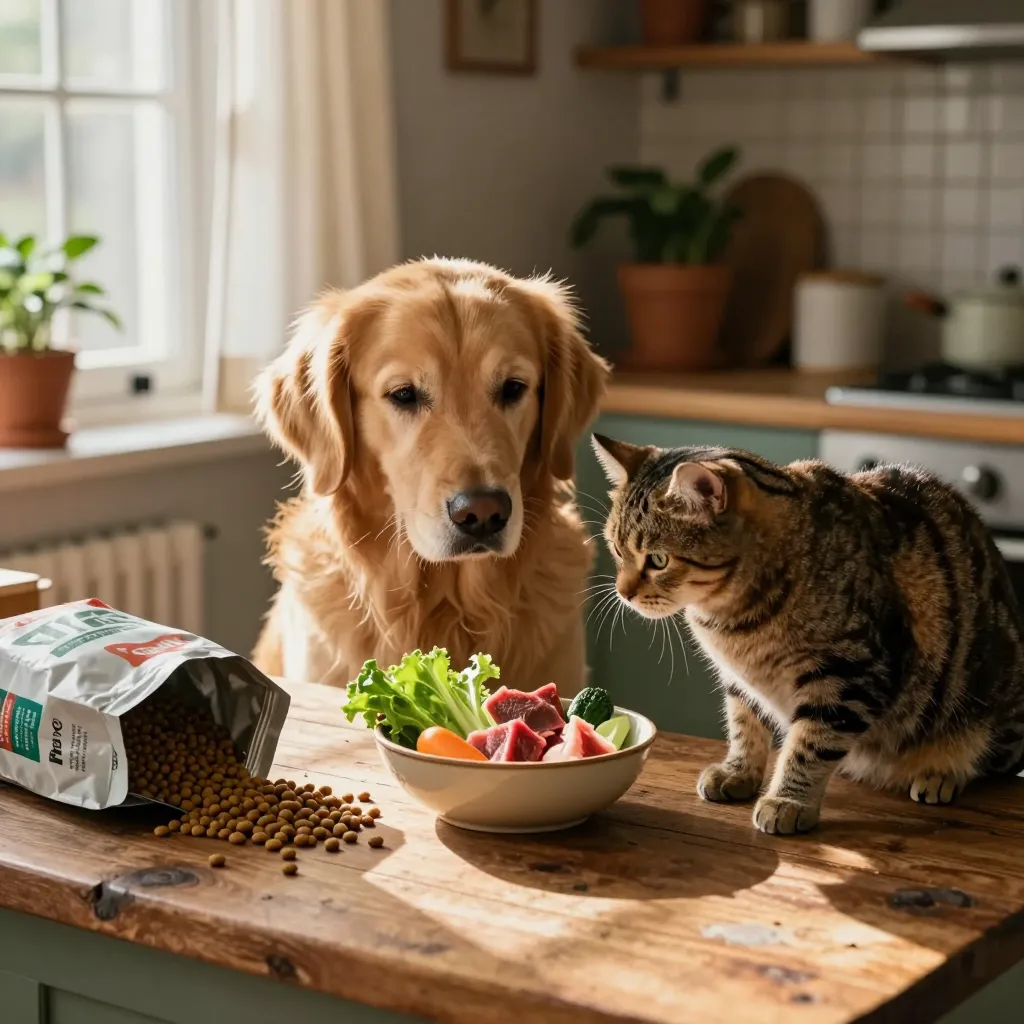
5 Dangerous Pet Nutrition Myths Every Dog & Cat Owner Must Stop Believing
From grain-free fads to raw food risks, this guide exposes the most dangerous pet nutrition myths circulating today. Learn why your dog or cat's diet might need an urgent overhaul and how to make science-backed choices for their long-term wellbeing.
Navigating the Truth About Pet Nutrition
[cite_start]Providing the right nutrition is one of the most impactful ways to support your pet's long-term health and vitality[cite: 1]. [cite_start]However, with so many trends and marketing claims circulating, it can be difficult to distinguish scientific fact from popular fiction[cite: 2, 5]. [cite_start]Understanding the reality behind common dietary myths allows you to make informed choices that truly benefit your cat or dog[cite: 4, 19].
The Grain-Free Debate
[cite_start]Many pet owners have transitioned to grain-free diets under the impression that grains are fillers or potential allergens[cite: 5].
- [cite_start]The Myth: Grains are unhealthy or unnatural for dogs and cats[cite: 5].
- [cite_start]The Reality: For the vast majority of pets, grains such as barley, oats, and rice are highly digestible and serve as valuable sources of fiber, vitamins, and essential carbohydrates[cite: 6].
- [cite_start]Nutritional Balance: Grains contribute to a complete and balanced nutritional profile[cite: 6]. [cite_start]Unless a pet has a diagnosed grain allergy, these ingredients are beneficial components of their daily intake[cite: 7].
Understanding Raw Food Risks
[cite_start]The "ancestral diet" movement suggests that feeding raw meat is the most natural way to nourish a pet[cite: 8].
- [cite_start]The Myth: Raw meat is superior to cooked food because it mimics what animals eat in the wild[cite: 8].
- [cite_start]The Reality: Raw diets pose significant safety concerns, most notably the risk of bacterial contamination from pathogens like Salmonella and E. coli[cite: 9].
- [cite_start]Safety Concerns: These bacteria are dangerous not only to the pet but also to the humans in the household who handle the food[cite: 9]. [cite_start]Furthermore, many homemade raw diets lack the precise balance of vitamins and minerals required for health, which can lead to long-term nutritional deficiencies[cite: 10].
The Danger of Table Scraps
[cite_start]It is often tempting to share a meal with a begging pet, but human food can be a hidden source of danger[cite: 12].
- [cite_start]The Myth: If a food is healthy for humans, it is safe for pets[cite: 12].
- [cite_start]The Reality: Many common ingredients used in human cooking are toxic to animals[cite: 12].
- [cite_start]Toxic Foods: Onions, garlic, grapes, and chocolate can cause severe illness or death[cite: 12].
- [cite_start]Health Risks: High-fat scraps can trigger serious conditions like pancreatitis or contribute to rapid weight gain and obesity[cite: 13].
- [cite_start]Safe Alternatives: While plain, unseasoned vegetables or lean meats can be safe in small amounts, they should never replace a balanced meal[cite: 12].
The Reality of Free-Feeding
[cite_start]Leaving a bowl full of food out at all times is a convenient method known as "free-feeding," based on the idea that animals will only eat what they need[cite: 14].
- [cite_start]The Myth: Pets can naturally regulate their own calorie intake[cite: 14].
- [cite_start]The Reality: Most pets, particularly dogs, will eat as much as is available regardless of hunger[cite: 14].
- [cite_start]Weight Management: Constant access to food frequently leads to overeating and obesity[cite: 14]. [cite_start]This excess weight puts pets at a higher risk for secondary health issues, including diabetes and joint degradation[cite: 14]. [cite_start]Using measured portions tailored to a pet’s specific age and activity level is the most effective way to maintain a healthy weight[cite: 15].
Quality Differences in Commercial Food
[cite_start]With endless options on the shelf, it is easy to assume that any bag of kibble or can of food provides the same basic nutrition[cite: 16].
- [cite_start]The Myth: All commercial pet foods are essentially the same[cite: 16].
- [cite_start]The Reality: There is significant variation in the quality of ingredients and the precision of the nutrient balance across different brands[cite: 17].
- [cite_start]Standards of Care: High-quality pet foods are formulated to meet strict standards set by the Association of American Feed Control Officials (AAFCO)[cite: 17]. [cite_start]Choosing a diet that is "complete and balanced" ensures your pet receives the specific ratio of proteins, fats, and micronutrients they need for their life stage[cite: 17, 18].