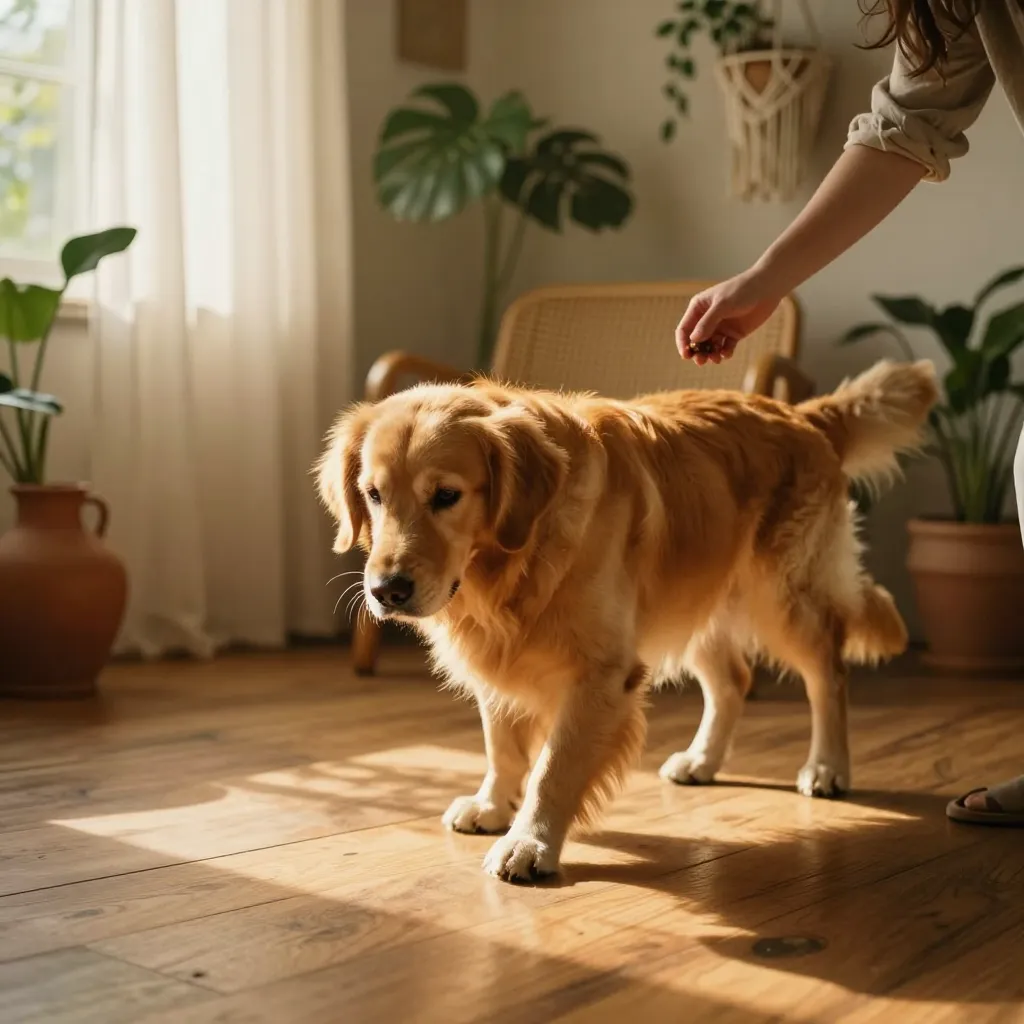
The Complete Guide to Dog Trick Training: Building Bonds and Better Behavior
Trick training goes beyond entertainment; it strengthens communication, provides mental exercise for working breeds, and offers adapted approaches for seniors and special needs dogs, enriching your dog's life.
The Complete Guide to Dog Trick Training: Building Bonds and Better Behavior
Teaching your dog tricks goes far beyond simple entertainment. Trick training strengthens the human-animal bond, provides mental stimulation, and can even address behavioral challenges. Whether you have a playful puppy or a seasoned senior, learning new skills keeps your dog engaged and happy.
Why Trick Training Matters
Many owners view tricks as mere party tricks, but they serve deeper purposes. When you teach your dog to spin, bow, or weave through your legs, you're establishing clear communication channels. Your dog learns to watch you carefully, interpret hand signals, and respond to verbal cues. This attentiveness carries over into everyday situations, making your dog more responsive and easier to manage.
Mental exercise proves just as important as physical activity. Dogs bred for work—herding, hunting, or guarding—often struggle in modern sedentary lifestyles. Trick training channels their intelligence into constructive outlets, preventing boredom-related behaviors like destructive chewing or excessive barking.
Getting Started: Foundation Skills
Before diving into complex routines, establish these basics:
Focus and Attention — Teach your dog to make eye contact on cue. Hold a treat near your face, say "watch me," and reward when your dog looks at your eyes. This becomes your anchor for all future training.
Luring and Shaping — Most tricks begin with food lures. Guide your dog's nose with a treat to encourage movement, then gradually fade the lure. For behaviors like "play dead," you might shape the action by rewarding successive approximations.
Marker Training — Use a clicker or consistent word like "yes" to mark exact moments of correct behavior. This precision helps your dog understand exactly what earned the reward.
Beginner-Friendly Tricks to Master
Paw and Shake
Hold a treat in your closed fist at your dog's chest level. Most dogs will paw at your hand to get it. The moment their paw touches your hand, mark and reward. Add the verbal cue "paw" once the behavior is consistent.
Spin
Lure your dog's nose in a tight circle with a treat. Complete the full rotation, mark, and reward. Practice in both directions, using "spin" for one way and "twist" for the other.
Touch (Target Training)
Present your open palm or a specialized target stick. Reward your dog for any nose contact. This versatile skill becomes the foundation for advanced tricks like closing doors or turning off lights.
Intermediate Challenges
Once your dog masters basics, progress to these engaging tricks:
Weave Through Legs — Step forward with one leg, lure your dog through, then reward. Gradually add more steps between legs until your dog fluidly weaves as you walk.
Play Dead — Start with your dog in a down position. Lure their head sideways and back, encouraging them to roll onto their hip. Mark and reward any relaxation of the legs. Eventually, add a dramatic finger-gun cue for flair.
Jump Through a Hoop — Begin with the hoop touching the ground. Lure your dog through, then gradually raise it. Always ensure your dog's physical condition supports jumping—avoid this trick with puppies under 12 months or dogs with joint issues.
Advanced Routine Building
Combining individual tricks into flowing sequences creates impressive performances and deepens your working relationship. When building a routine:
- Choose tricks with natural transitions (spin into bow, touch into jump)
- Maintain consistent energy and enthusiasm throughout
- Practice transitions separately before stringing them together
- Keep routines under two minutes to hold attention and prevent fatigue
Training Tips for Success
Keep sessions short — Five to ten minutes prevents mental fatigue. End on a positive note while your dog remains eager.
Use high-value rewards — Save special treats like freeze-dried liver or cheese for challenging new tricks. Reserve kibble or lower-value rewards for well-established behaviors.
Read your dog's body language — Yawning, lip licking, or turning away signal stress or confusion. Take breaks, simplify the task, or try again later.
Train before meals — A slightly hungry dog works harder for food rewards. Schedule sessions before breakfast or dinner.
Proof behaviors gradually — Practice in different rooms, then outdoors, then with mild distractions. Don't expect perfect performance in a dog park if you've only trained in your living room.
Addressing Common Challenges
My dog gets frustrated — If your dog barks, paws, or shuts down, you're likely asking too much too soon. Break the trick into smaller steps and reward incremental progress.
My dog only works when I have food — Start variable reinforcement—reward every other correct response, then every third, then randomly. Occasionally jackpot with multiple treats for exceptional effort.
My dog performs at home but not elsewhere — This indicates insufficient proofing. Return to easier environments and build distraction tolerance gradually.
Trick Training for Special Needs Dogs
Dogs with disabilities thrive with adapted training approaches. Deaf dogs excel at visual cues and hand signals. Blind dogs rely on verbal cues, touch targets, and scent markers. Dogs with mobility limitations can learn stationary tricks like "say your prayers" (bowing head on a chair) or "wave" using just a front paw.
One remarkable approach involves teaching deaf and blind dogs to follow a touch signal trail along your leg, building confidence through physical connection. These dogs often become the most attentive partners, deeply attuned to subtle communication.
Integrating Tricks into Daily Life
Transform ordinary moments into training opportunities:
- Ask for a "spin" before opening the door for walks
- Request "paw" before meals to practice patience
- Use "touch" to guide your dog onto the scale at vet visits
- Perform a quick routine during commercial breaks while watching television
The Therapeutic Value
Trick training offers particular benefits for anxious or reactive dogs. The structured interaction provides predictability that builds confidence. Success experiences counter anxiety, while the mental engagement redirects focus away from triggering stimuli. Many behaviorists recommend trick training as part of comprehensive rehabilitation programs for fearful dogs.
For senior dogs, gentle trick work maintains cognitive function and physical flexibility. Modify expectations—an older dog might offer a slow, deliberate spin rather than a quick twirl—but keep the mental engagement active.
Conclusion
Dog trick training transcends simple entertainment. It builds communication, provides essential mental stimulation, and creates joyful shared experiences. Whether you're teaching a basic "shake" or choreographing an elaborate routine, the process strengthens your bond and enriches your dog's life. Start with one simple trick today, and discover how quickly your eager learner progresses from novice to star performer.