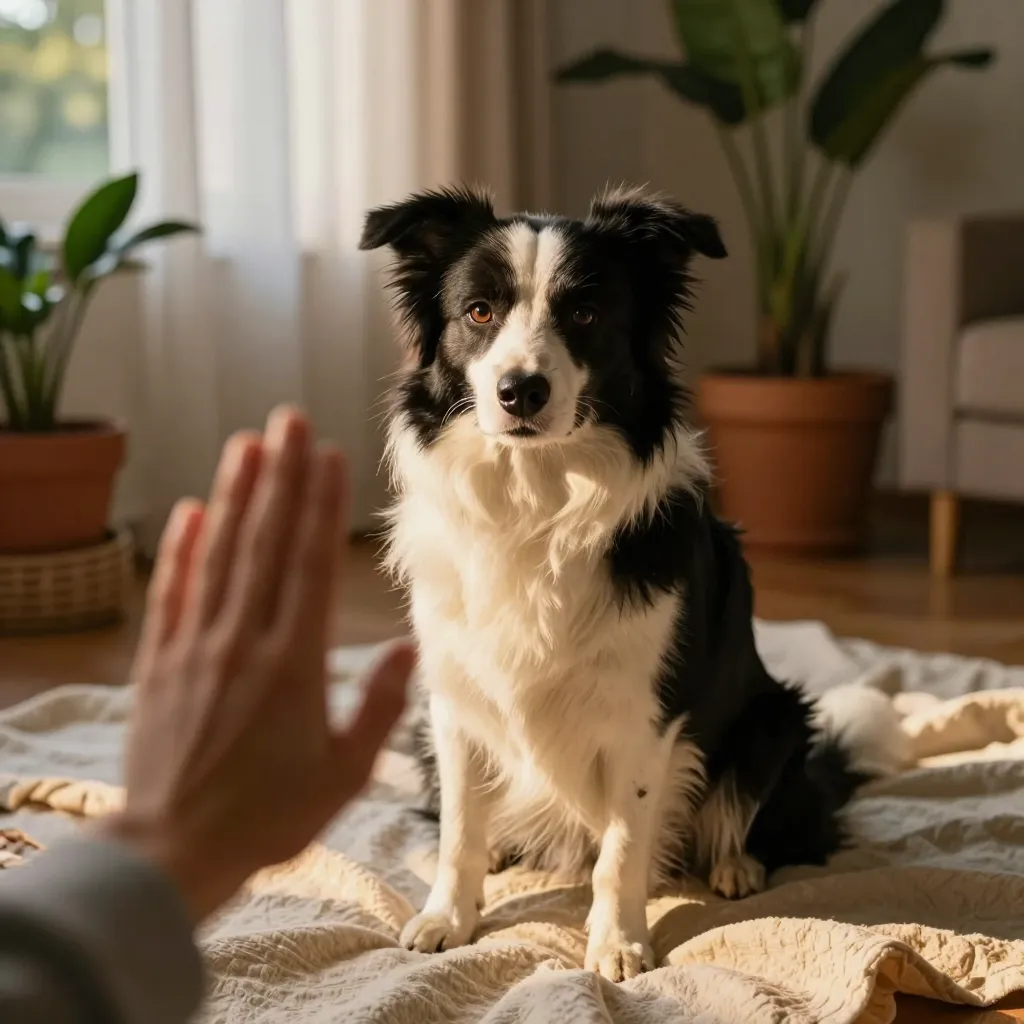
Master Hand Signals: The Silent Language Dogs Understand Better Than Words
Dogs are natural body language experts who respond more reliably to visual cues than spoken words. This guide teaches you how to build an effective hand signal system for training, from basic commands like sit and stay to advanced directional guidance. Perfect for puppy training, senior dogs with hearing loss, or navigating noisy environments.
The Power of Hand Signals in Dog Training
Dogs are natural body language experts. Long before they understood human words, they evolved to read subtle physical cues—from the tilt of an ear to the tension in a shoulder. This ancient sensitivity makes hand signals one of the most effective tools in your training toolkit, often outperforming verbal commands in clarity and reliability.
Why Visual Cues Resonate
Research in animal cognition consistently shows that dogs respond more reliably to gestures than to spoken words. While they can certainly learn verbal commands, their brains are wired to prioritize visual information. A raised hand, a pointed finger, or a flat palm carries immediate meaning that transcends the confusion of similar-sounding words or background noise.
This visual preference makes sense from an evolutionary standpoint. Canines communicate primarily through posture, movement, and spatial positioning. When we incorporate hand signals into training, we're essentially speaking their native language.
Building Your Visual Vocabulary
Creating an effective hand signal system doesn't require complexity. The best signals are distinct, consistent, and comfortable for you to execute repeatedly. Here are foundational cues that form the backbone of most training programs:
Sit: Form a loose fist with your thumb resting on top of your fingers. Present this with knuckles facing upward, then lift your hand in a smooth, upward motion—like pulling a zipper. This movement naturally draws the dog's gaze upward, encouraging the rear to lower.
Down: Use the same fist formation, but orient it with fingers pointing toward the ground. Lower your hand steadily toward the floor. The downward trajectory guides the dog's body into position.
Stay/Wait: Extend a flat palm with fingers pressed together, much like a human "stop" gesture. Hold this briefly with a slight forward push to establish the boundary.
Come: Stand sideways to your dog and extend one arm, sweeping your hand toward your body in a welcoming arc. This open, inviting motion clearly communicates the desired direction of movement.
Touch/Target: Present a flat palm with fingers closed tightly, positioning it just below your dog's nose level. This non-threatening placement encourages confident nose-to-hand contact.
Teaching Methodology
The most effective approach introduces hand signals before verbal cues. This sequencing leverages your dog's natural visual strengths and creates strong behavioral associations that you can later pair with words if desired.
Begin with a lure in your signaling hand. Guide your dog into the desired position using the hand motion you intend to use long-term. Once the behavior is consistent, fade the food lure while maintaining the identical hand movement. The signal itself becomes the predictor of reward, not just the food it once held.
Precision matters enormously. A signal delivered at nose level versus chest level, or with fingers spread versus pressed together, registers as entirely different communications to your dog. Document your chosen signals or practice them in front of a mirror to ensure consistency.
Advanced Applications
Once fundamentals are solid, expand your visual vocabulary to suit your lifestyle:
Heel Position: A horizontal hand wave toward your hip signals your dog to tuck in close, invaluable in crowded spaces or near traffic.
Directional Guidance: Pointing with an extended arm and finger indicates which path to take at intersections—essential for hiking, urban navigation, or agility courses.
Release Signals: "Jazz hands" or a sweeping dismissal gesture clearly communicates the end of a training session or that rewards are no longer available.
Precision Behaviors: A flat palm offered sideways beneath the chin teaches a calm chin rest, while a cupped palm near a front leg requests a paw lift.
Special Considerations
Hand signals prove invaluable for aging dogs experiencing hearing loss. Teaching these cues early creates a communication bridge that remains intact even when auditory abilities fade. For dogs in noisy environments—urban settings, competition venues, or homes with multiple pets—visual cues cut through chaos that would drown out verbal commands.
Consider your dog's perspective when designing signals. Direct eye contact can feel confrontational to some dogs, so positioning your hand slightly to the side or below their eye level often produces better responses. Similarly, rapid or exaggerated movements may excite rather than guide; smooth, deliberate motions typically yield calmer, more thoughtful compliance.
Troubleshooting Common Challenges
If your dog responds inconsistently, audit your own mechanics first. Are you using the same hand? The same orientation? The same distance from your dog's face? Variations that seem minor to us create genuine confusion for our visual learners.
Some handlers unconsciously pair unintended body language with their signals—leaning forward during a stay cue, for example, which physically pressures the dog to move. Video recording your training sessions often reveals these hidden inconsistencies.
For dogs who struggle with focus, ensure your hand signal contrasts clearly against your clothing and the background. A dark hand signal against a dark jacket disappears; the same signal against a light background commands attention.
Integrating Signals into Daily Life
The true test of any training system is its utility in real-world scenarios. Practice your hand signals during casual moments—while preparing meals, during commercial breaks, or while your dog relaxes nearby. This low-pressure integration builds fluency without the intensity of formal training sessions.
Gradually introduce distance between yourself and your dog, ensuring signals remain visible and meaningful from across rooms or yards. Test your system in varied environments with increasing distractions, always ready to return to closer, clearer presentations if communication breaks down.
The investment in a robust hand signal system pays dividends throughout your dog's life. Whether navigating a senior dog's hearing loss, competing in obedience trials, or simply enjoying clearer daily communication, your hands become powerful instruments of understanding—speaking a language your dog was born to read.