Airedale Terrier: The King of Terriers — Breed Guide & Care Essentials
The Airedale Terrier stands as the undisputed King of Terriers — the largest, boldest, and most versatile of the terrier family. From hunting fields to presidential lawns, this intelligent, courageous breed thrives with active owners who can match its energy and wit.
Airedale Terrier: The King of Terriers
The Airedale Terrier stands as the undisputed monarch of the terrier family—larger, bolder, and more versatile than any of its earth-dog cousins. With a wiry coat, keen intelligence, and a personality that blends courage with clownish charm, this breed has earned admirers across hunting fields, police departments, and family living rooms alike.
Breed Snapshot
| Trait | Detail |
|---|---|
| Size | Medium to large (largest of all terriers) |
| Height | Approximately 23 inches at the shoulder |
| Weight | 50–70 pounds |
| Lifespan | 11–14 years |
| Coat | Dense, wiry, tan with black markings |
| Group | Terrier Group |
| Temperament | Friendly, courageous, clever |
Physical Characteristics
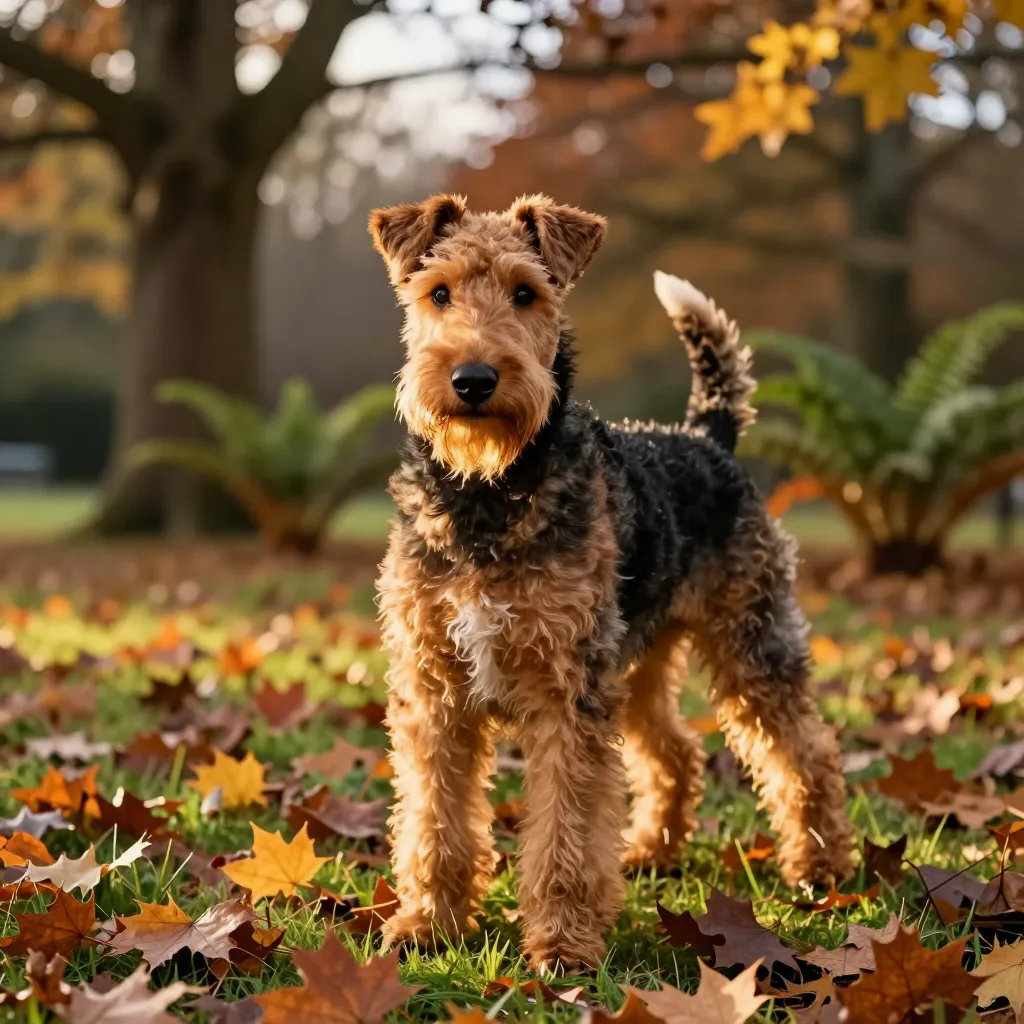
The Airedale cuts an unmistakable figure. Standing taller than any other terrier, this breed carries itself with an almost regal posture—muscular legs lending an elevated, confident gait. The head is long and strong, framed by a distinctive beard and mustache that give the face a thoughtful, almost scholarly expression. Dark, intelligent eyes and neatly folded ears complete the portrait of alertness.
The coat is functional as well as handsome: a harsh, wiry outer layer with a softer undercoat that provides protection during rough outdoor work. Coloration follows a classic pattern—tan on the head, legs, and undercarriage, with a dark saddle of black or grizzle across the back.
Personality and Temperament
Don't let the dignified appearance fool you. The Airedale possesses a terrier's trademark spark—playful, occasionally stubborn, and always ready for adventure. They form deep bonds with their families and are notably patient with children, though their boisterous energy means playtime with small kids should always be supervised.
This breed retains strong protective instincts without descending into unnecessary aggression. An Airedale will alert you to approaching strangers with confidence, yet typically warms quickly to welcomed guests. Their courage is legendary; they won't back down when they perceive a genuine threat to home or family.
Intelligence ranks among the Airedale's most defining traits. These dogs problem-solve creatively, which makes them both a joy to train and a challenge when bored. Without mental engagement, an Airedale will invent its own entertainment—often involving rearranged furniture, excavated gardens, or cleverly opened cabinets.
Living with an Airedale
Exercise Needs
As the largest terrier, the Airedale brings proportionally large energy reserves. Daily walks are essential, but this breed truly thrives when given a job or structured activity. Fetch, agility training, swimming, or long hikes all help channel that terrier drive constructively. A tired Airedale is a happy Airedale; an under-exercised one becomes a household demolition expert.
Training and Mental Stimulation
Training an Airedale requires consistency, patience, and a sense of humor. They pick up commands quickly but may question whether compliance serves their interests. Positive reinforcement works far better than harsh correction—these dogs respond to respect and challenge, not dominance.
Mental exercise matters as much as physical activity. Puzzle toys, scent work, obedience trials, or learning new tricks keep their busy minds satisfied. Many Airedales excel in canine sports including obedience, rally, and barn hunt competitions.
Grooming Requirements
The wiry coat demands regular attention but not excessive pampering. Weekly brushing removes dead hair and prevents matting—particularly important since Airedales are often marketed as hypoallergenic-friendly, and consistent grooming supports that reputation. Professional hand-stripping or clipping three to four times yearly maintains the proper coat texture and shape.
Routine ear cleaning, nail trimming, and dental care complete the maintenance schedule. The breed's low drooling tendency and minimal doggy odor make them relatively tidy housemates for their size.
Health Considerations
Generally robust, Airedales can be prone to certain hereditary conditions prospective owners should monitor:
- Hip dysplasia — malformation of the hip joint that can lead to arthritis
- Cardiac issues — regular heart screening recommended
- Eye conditions — including progressive retinal atrophy
- Kidney disease — particularly renal dysplasia in some lines
Reputable breeders conduct health testing on parent dogs. Routine veterinary care, proper diet management, and maintaining healthy weight all contribute to longevity in this breed.
Historical Background
The Airedale emerged from England's Aire Valley during the mid-1800s, when the Industrial Revolution transformed the Yorkshire region into a manufacturing powerhouse. Local workingmen needed a versatile dog capable of multiple tasks—hunting river otters and rats, retrieving game, guarding factories and homes, and even serving as a police companion.
Breeders combined several existing types: the old English rough-coated Black and Tan Terrier for tenacity, the Otterhound for swimming ability and size, and possibly Irish and Bedlington Terriers for refinement. Early specimens went by various names—Working Terrier, Waterside Terrier, Bingley Terrier—before the breed standard unified under "Airedale Terrier."
Their utility quickly transcended English borders. German and British police forces adopted Airedales among the first official police dogs. Military messengers and sentinels served in both World Wars. American presidents including Woodrow Wilson, Warren G. Harding, and Calvin Coolidge kept Airedales as companions, cementing the breed's stateside popularity.
Westminster Kennel Club Best in Show wins in 1912, 1919, 1922, and 1933 further elevated their public profile. Literary figures like John Steinbeck also favored the breed, drawn to their combination of rugged capability and loyal companionship.
Is the Airedale Right for You?
Consider this breed if you:
- Lead an active lifestyle and want an adventure partner
- Have time for daily exercise and mental engagement
- Appreciate intelligence with an independent streak
- Want a protective but not aggressive family guardian
- Can commit to regular grooming or professional maintenance
Reconsider if you:
- Prefer a lapdog or low-energy companion
- Lack time for training and consistent exercise
- Want a dog that blindly follows commands without question
- Cannot handle occasional stubbornness or creative problem-solving
Similar Breeds to Explore
Several terrier breeds share the Airedale's spirit in smaller packages:
- Irish Terrier — Bold and fiery, with a striking red coat
- Kerry Blue Terrier — Soft, wavy blue-gray coat with people-oriented personality
- Lakeland Terrier — Compact and friendly, bred for working England's Lake District
For those drawn to the Airedale's versatility but seeking different characteristics, the Standard Schnauzer offers comparable intelligence and working ability with a different coat type and temperament profile.
The Airedale Terrier remains one of canine history's most accomplished all-rounders. From factory floors to presidential lawns, from police beats to family sofas, this breed has proven that true nobility comes not from size alone, but from character, capability, and an unwavering spirit. For owners willing to match their energy and intelligence with purposeful engagement, the King of Terriers delivers loyalty and companionship fit for royalty.