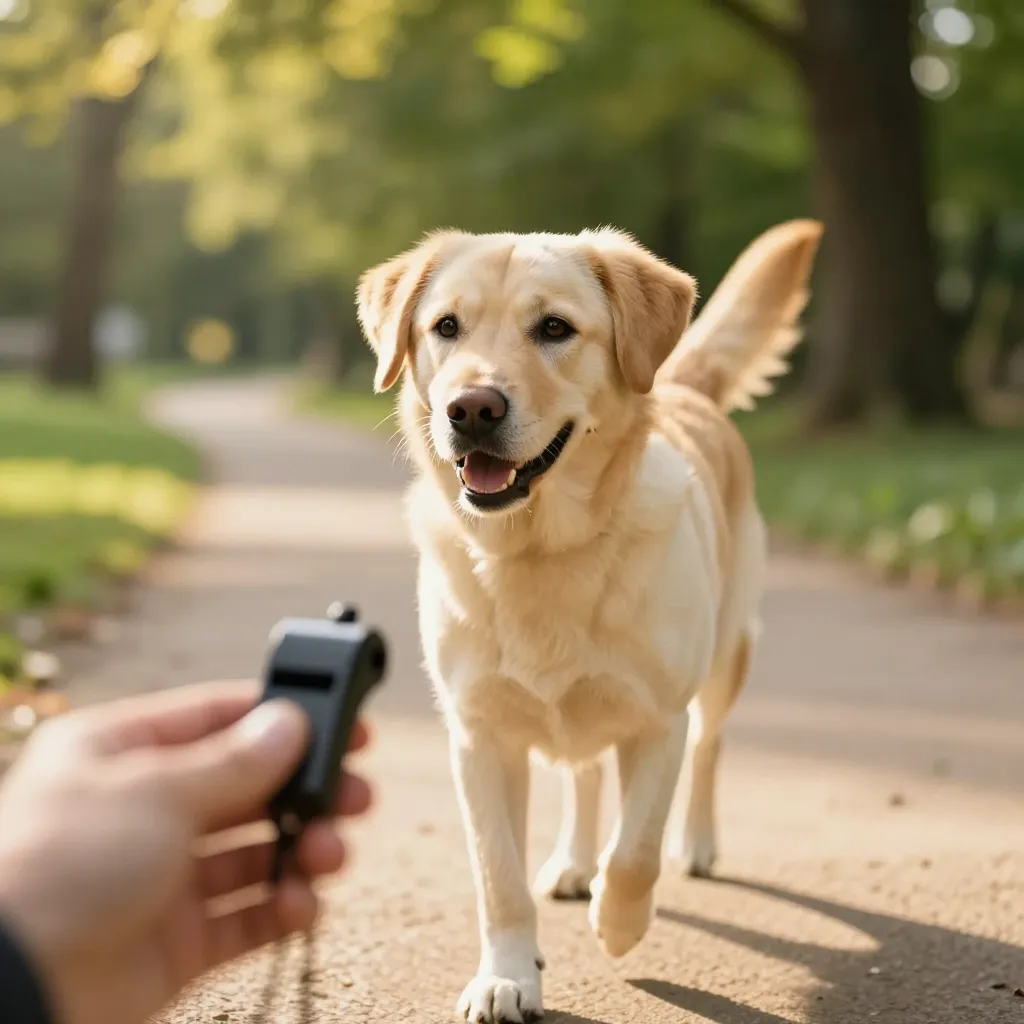
Mastering Dog Whistle Training: A Complete Guide to Reliable Recall
This guide covers phased training from priming to proofing, ensuring your dog comes every time you whistle. Whistles provide consistent, emotion-free cues that cut through noise, ideal for all dogs. Perfect for owners seeking fail-proof off-leash safety and communication.
Mastering Dog Whistle Training: A Complete Guide to Reliable Recall
There's something almost magical about watching a dog respond instantly to a sharp whistle blast, turning mid-chase to sprint back to their handler. This isn't instinct—it's carefully crafted training that transforms a simple tool into one of the most reliable communication channels between you and your canine companion.
Why Whistles Outperform Voice Commands
Human voices carry baggage. Tone fluctuates with mood, stress, or exhaustion. A recall shouted in panic sounds fundamentally different from one said casually in the backyard, and dogs notice these variations. Whistles eliminate this inconsistency entirely.
The benefits extend beyond reliability. Aging dogs often lose high-frequency hearing last, meaning a whistle remains audible when your voice fades into silence. In emergency situations—think surf crashing, thunder rolling, or machinery roaring—a whistle cuts through ambient noise that would swallow spoken words. The sound travels farther too, crucial if your dog ever wanders beyond visual range.
Most importantly, whistles carry no emotional history. If you've ever snapped "come" in frustration or chased your dog while shouting (accidentally teaching them that recall means play-keep-away), a whistle offers a clean slate—a neutral cue unburdened by past mistakes.
Building Your Foundation
Before introducing any whistle, three prerequisites must exist: voluntary eye contact, name recognition, and a functional verbal recall. Skip these, and you're constructing a roof without walls.
Establishing Attention Load a clicker by clicking once and delivering a treat within half a second. Repeat for two minutes. This "charging" process creates a conditioned response where the click predicts guaranteed reward. Once established, place treats behind your back and wait silently. When your dog inevitably looks up—wondering why the food stopped—click and treat. Practice this eye contact game in multiple locations; dogs don't generalize well, so kitchen success doesn't guarantee park performance.
Name Response When your dog voluntarily looks at you, say their name, then click-treat. The name becomes a predictor of good things, not a nagging command. If your dog's name has been poisoned through overuse or negative associations, change it now. Pick something crisp and unused.
Verbal Recall With your dog looking at you, say their name, pause briefly, then deliver your come cue, followed immediately by click-treat. Initially, add no movement—motion complicates the learning process. Keep sessions to two-three minutes, repeated two-three times daily across varied environments.
The Priming Phase: Creating Whistle Value
Select a fixed-pitch whistle (variable whistles introduce inconsistency). The specific model matters less than your commitment to using it exclusively.
For fourteen days, "prime" the whistle without asking for behavior. Three times daily, for two-three minutes, deliver your pattern—two short blasts followed by one extended tone—then treat within half a second. The dog hears the sound, receives food. No movement required. No response expected. You're building a conditioned emotional response: whistle predicts wonderful things.
This back-chaining approach trains the final position first. Since all recalls end with your dog directly in front of you, they learn that proximity to you plus whistle sound equals jackpot.
If your dog shows fear (flattening ears, cowering, fleeing), abandon the whistle immediately. Test with a toy squeaker instead—if tolerated, substitute that for whistle training.
Phase One: Adding Movement
After two weeks of priming, introduce motion through structured games.
Drop and Chase In a fenced area or on a thirty-foot long line, drop a visible treat and cue "get it." The moment your dog commits to the food, sprint away while maintaining visual contact. When they lift their head and begin pursuit, stop, turn to face them, and as they approach, deliver your whistle pattern. Reward with ten to twenty small treats fed sequentially—not handfuls, but rapid individual delivery that extends the reinforcement. Add praise, petting, or brief play.
Critical rule: never whistle unless your dog is already moving toward you. The whistle names the behavior in progress, not requests it from scratch. Practice this game exclusively for one week, gradually increasing environmental distractions.
Phase Two: Fading the Chase
Toss and Return Now throw treats twenty feet away—use highly visible white cheese or chicken against grass—and stand still. Your dog has learned the pattern from week one: grab food, race to handler. As they return, whistle and jackpot heavily.
Again, one week minimum. Again, never whistle a stationary dog. The goal is reinforcing the return loop, not creating dependency on thrown food or running humans.
Phase Three: Real-World Distractions
The Boring Handler Game Stand motionless in low-distraction environments. Ignore your dog completely—check your phone, examine the sky, act profoundly uninteresting. Monitor peripherally. When your dog drifts five to six feet away, deliver one short toot. If they turn toward you, complete your full pattern and celebrate extravagantly.
Gradually extend distance and distraction levels, but incrementally. Six feet to twenty feet in one session invites failure. Continue using long lines in unfenced areas.
Proofing: Making It Bulletproof
Check-In Walks Off-leash or on long lines, whistle only when your dog voluntarily looks back at you. Jackpot heavily, then release with a verbal cue to resume exploring. Repeat until check-ins occur every thirty to sixty seconds naturally.
Once established, whistle before the check-in—but judiciously. Read your dog's body language; calling during intense sniffing or fixation risks ignored cues that weaken training. If uncertain, deliver a "questioning" single toot. No response? Wait. Try again when engagement seems more likely.
Advanced Distraction Training
The Liar's Game Enlist a helper holding low-value treats or toys. Send your dog toward them while you retreat across the space. Verbally recall (initially—transition to whistle once the pattern holds). The helper attempts mild distraction without offering their bait or making eye contact. Wait silently—no cue repetition. When your dog looks to you, whistle and jackpot massively.
Progress by increasing helper temptation value while matching your rewards. Add multiple helpers. The lesson: you always deliver, distractions never do.
Hide and Seek During walks, duck behind trees or bushes while your dog investigates elsewhere. Ensure visual contact remains possible. Say their name once for orientation, then whistle as they approach. Eventually, eliminate the name cue—whistle alone suffices.
Maintenance: Keeping Skills Sharp
Trained behaviors decay without practice. Monthly "priming" sessions and occasional game play prevent rust. Whistle recalls aren't "one and done" achievements but ongoing relationships requiring nourishment.
The investment yields extraordinary returns: a dog who returns reliably through chaos, distance, and competing interests—guided by a sound that means, unmistakably, "good things happen here."