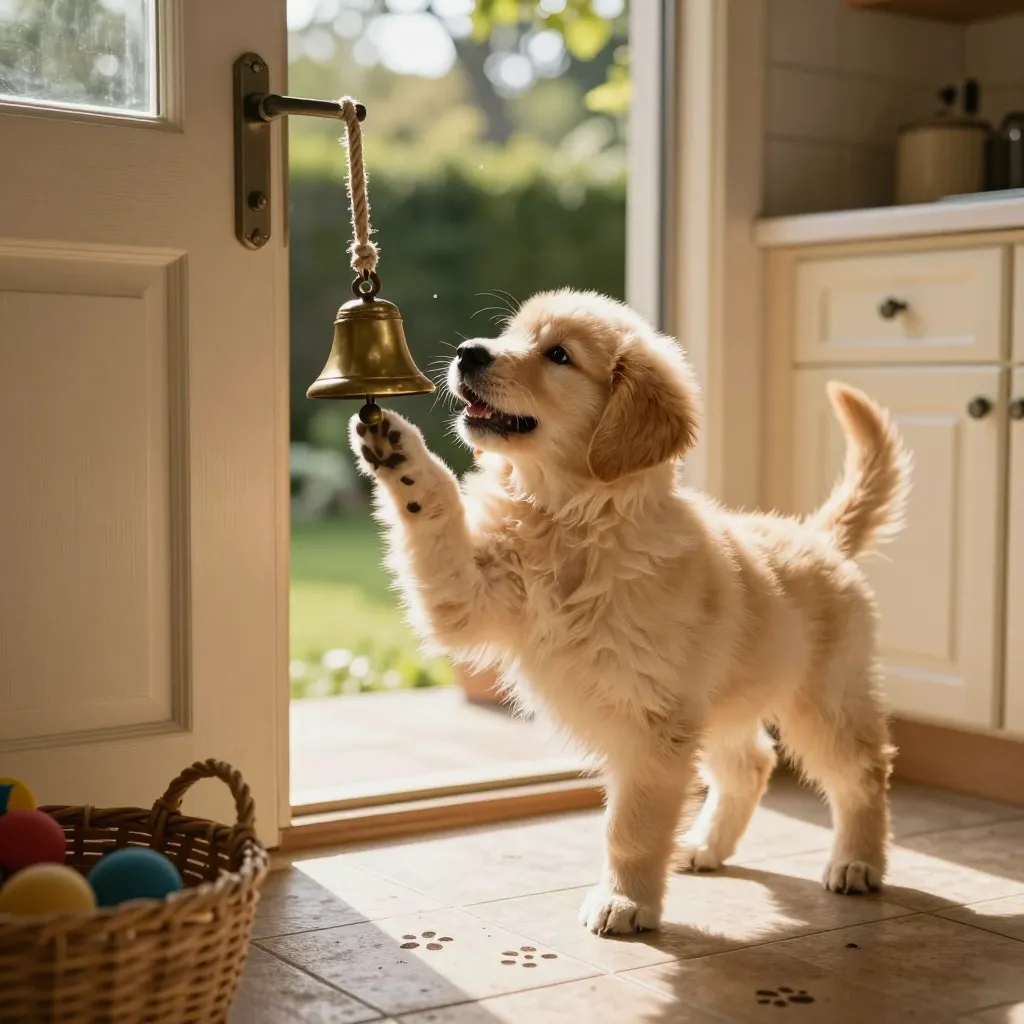
Bell Potty Training: Teach Your Dog to Ring Before Going Out
Turn potty time into a clear conversation: bell rings, door opens, business done. This step-by-step guide shows dog owners how to teach the bell trick in days, prevent misuse, and end indoor accidents for good.
Teaching Your Dog to Ring a Bell for Potty Breaks
A bell by the door can become your dog's voice when nature calls. This simple training technique gives dogs a clear, consistent way to communicate their needs—and saves you from guessing whether they want to play, explore, or relieve themselves.
Why Bell Training Works
Dogs want to communicate with us. Without a shared language, they often resort to subtle signals: standing by the door, pacing, or whining. A bell removes the ambiguity. When properly trained, your dog learns that a specific sound means a specific outcome: the door opens for a potty break.
The key is precision. Bell training succeeds when you create a direct line between the action (ringing) and the consequence (going outside to eliminate). Without clear boundaries, clever dogs quickly learn that the bell also summons you for playtime, attention, or midnight garden inspections.
Choosing the Right Bell
Two styles dominate the market:
Hanging bells attach to doorknobs. Dogs nose or paw them to create sound. These work well for dogs of all sizes, though very small puppies may struggle to reach them initially.
Wall-mounted buttons sit at nose height and produce a tone when pressed. These suit homes where doorknob bells swing too wildly or when you want a distinct sound from your regular doorbell.
Before training begins, test your chosen device. Let your dog investigate it while you observe. Some dogs startle at sharp or brassy tones. A nervous association with the bell will sabotage training before it starts.
The Training Process
Step 1: Establish Targeting
If your dog already knows "touch" or hand-targeting, you have a head start. Hold a small sticky note in your palm and ask for a touch. When your dog's nose contacts the paper, mark the moment with a word ("yes") or clicker, then reward immediately with a high-value treat.
Repeat until your dog reliably bumps the note with enthusiasm.
Step 2: Transfer to the Bell
Move the sticky note onto your chosen bell or button. Continue asking for touches using your original cue. The note provides a familiar visual target on an unfamiliar object.
Once your dog consistently targets the note on the bell, introduce a new cue phrase—something specific like "ring" or "outside." Say your original cue first, then immediately follow with the new one. Gradually fade the original cue until only the new one remains.
Step 3: Build the Potty Connection
Timing transforms this trick into a useful tool. When you know your dog likely needs to eliminate—first thing in the morning, after meals, before bedtime—approach the door together.
Ask your potty question: "Need to go out?" Most dogs telegraph their answer through body language—sudden alertness, tail movement, or dancing feet. Prompt the bell behavior. If they hesitate, ring it yourself while repeating your question, then immediately open the door and lead them to their potty spot.
Success earns celebration. Neutral outings for non-potty purposes should use different doors or different verbal cues entirely. Consistency prevents the "bell as universal remote" problem.
Maintaining the System
Select a bell with a tone that carries through your home. You'll need to respond promptly, especially during early training, to reinforce the connection between sound and access.
Differentiate between outings. Potty breaks, yard play, and walks should each have distinct signals—whether that's separate doors, different phrases, or variations in your pre-departure routine. Dogs excel at pattern recognition; clear patterns produce reliable behavior.
With patience and consistency, your dog will master this gentle, effective communication tool—and you'll never miss another urgent request again.